
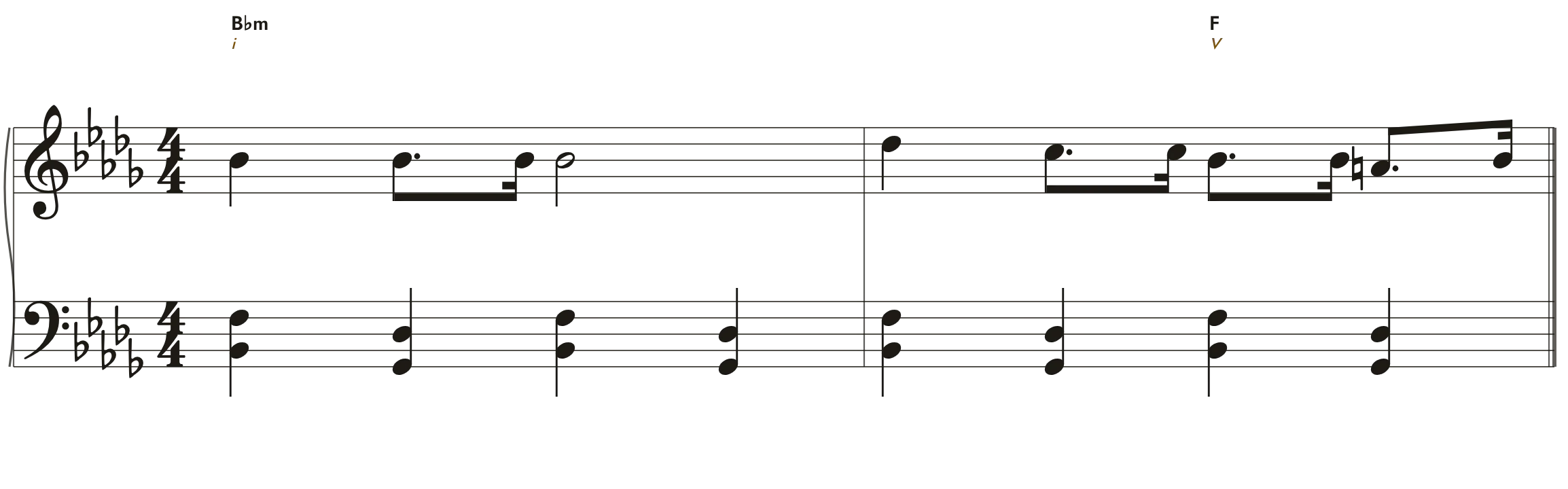
From the Piano Sonata No. 2 in B♭ minor. A slow tread in the left hand, a single repeated note in the right that rises and sinks back.
The story
Chopin wrote the funeral march in 1837, then built a whole sonata around it two years later at George Sand’s country house in Nohant. Robert Schumann was baffled by the sonata and said Chopin had bound together four of his “most reckless children”.
The march alternates a heavy, tolling theme with a calm, consoling middle section in a major key, like a memory of happier days.
An orchestrated version was played at Chopin’s own funeral in Paris in 1849. Since then it has accompanied state funerals around the world, including those of John F. Kennedy and Winston Churchill.
Three things to know
- The left hand imitates bells: a low chord swinging between two notes.
- Chopin was only 39 when he died, of tuberculosis.
- The sonata’s finale lasts about a minute and a half, both hands in unison, like wind over graves.
How to play it
Keep the tempo heavy and steady, like footsteps. The melody should sound as if it is sung by a choir in the distance.