
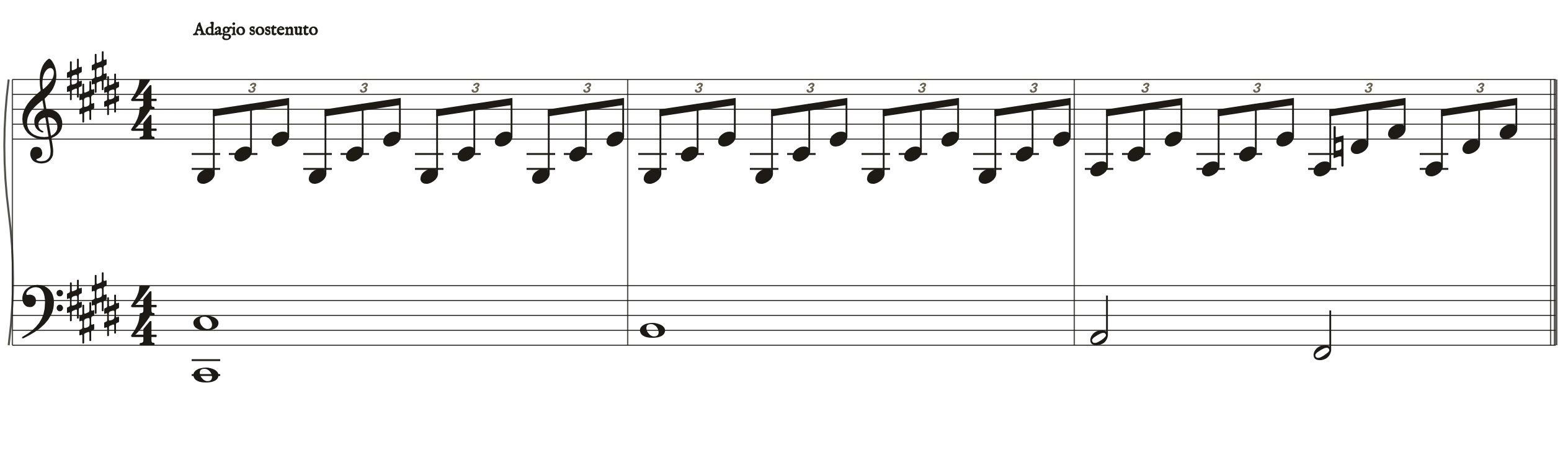
Sonata quasi una fantasia, Op. 27 No. 2. Even, hushed triplets over slow bass notes. Keep the triplets perfectly level.
The story
Beethoven called it “Sonata quasi una fantasia”, a sonata in the manner of a fantasy, because it breaks the rules: instead of opening fast, it begins with this slow, hushed movement. He wrote it in 1801, when he was 30 and first admitting to friends that he was going deaf.
He dedicated it to his teenage pupil, Countess Giulietta Guicciardi, with whom he was in love. The nickname came five years after his death, when the critic Ludwig Rellstab compared the first movement to moonlight shining on Lake Lucerne.
Beethoven asked for the whole movement to be played very delicately with the sustain pedal down, letting the harmonies blur into one another like mist.
Three things to know
- The right hand plays triplets, three notes per beat, without stopping from the first bar to the last.
- Beethoven reportedly grumbled that everyone talked about this sonata when he had written better ones.
- The third movement, which you can import, is one of the fastest and most furious things he ever wrote.
How to play it
These opening bars are pure atmosphere: triplets over a slow bass, before the melody enters. Keep the triplets soft and perfectly even, like a heartbeat, and let the bass notes ring.