
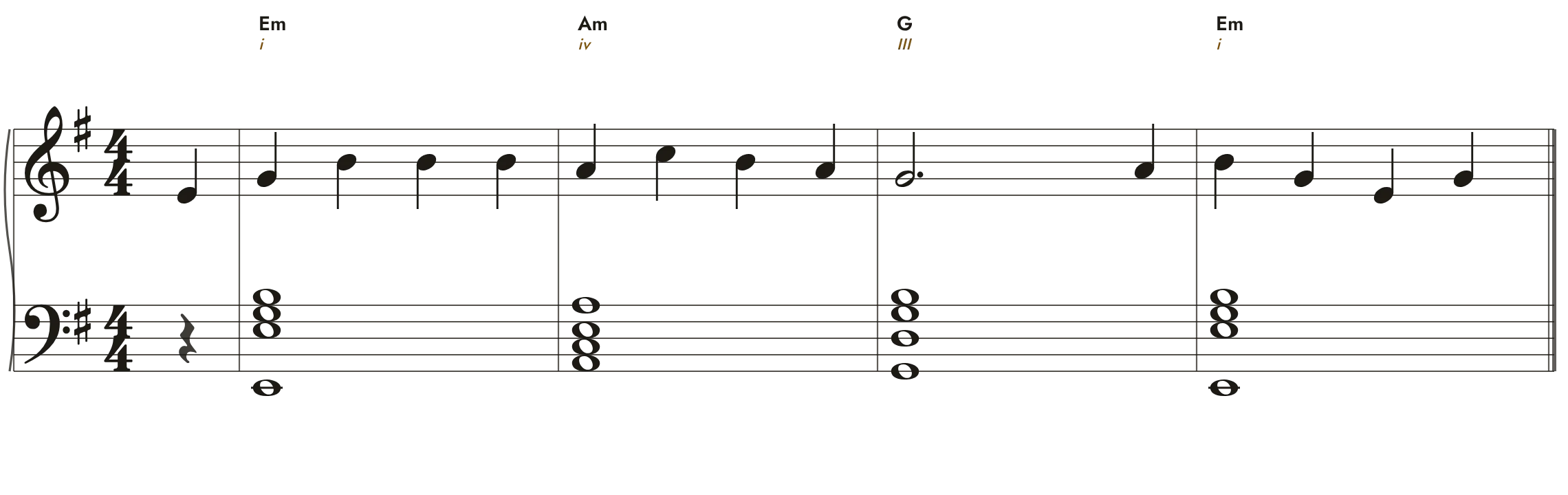
An old Advent plainsong in E minor, sung in cold stone churches for five centuries. The left hand moves in plain hymn chords.
The story
The words grew out of the “O Antiphons”, short Latin chants sung in the last seven days before Christmas since at least the 8th century. Each one calls on the coming Messiah by a different title.
The English text best known today was translated by John Mason Neale in 1851, and the tune was attached to it a few years later.
For a long time no one knew where the melody came from. In 1966 the musicologist Mary Berry found it in a 15th-century French manuscript, where it was sung during funeral processions.
Three things to know
- The refrain “Rejoice! Rejoice!” is the only bright moment in a melody that is otherwise in a dark minor mode.
- It is one of the oldest melodies still widely sung at Christmas.
- Its slow, chant-like rhythm comes from the way monks sang, following the words rather than a strict beat.
How to play it
Phrase it like singing: breathe (lift your hands) at the end of each line of words.