
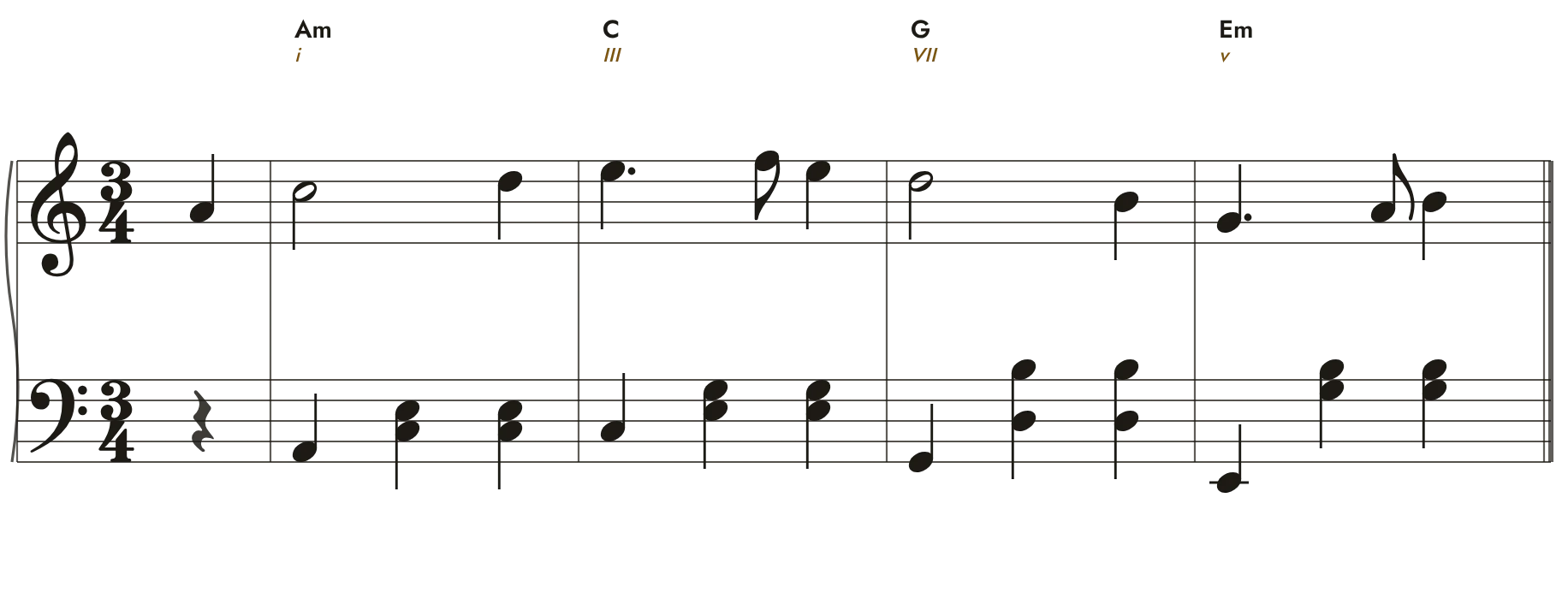
A Tudor ballad in A minor, verse and refrain. The raised G♯ gives it that old, aching pull.
The story
A ballad called “A Newe Northen Dittye of ye Ladye Greene Sleves” was registered in London in 1580. It tells of a lover rejected by a lady dressed in green.
A popular legend says Henry VIII wrote it for Anne Boleyn. It is almost certainly not true: the tune is built on an Italian chord pattern that only reached England after Henry’s death.
Shakespeare mentions Greensleeves twice in The Merry Wives of Windsor, so it was clearly a hit in his day too. In 1865 new words turned it into the Christmas carol “What Child Is This?”.
Three things to know
- The tune is in a minor mode that wavers between natural and raised notes, which gives it its old, bittersweet colour.
- Vaughan Williams and Holst both wrote famous arrangements of it.
- In Tudor England green sleeves were a fashionable colour, and sometimes a sly joke.
How to play it
It is in a lilting three, long-short, long-short. Let it swing gently rather than marching.